Lane centering, adaptive cruise control, and automatic braking can reduce workload, but they do not make an ordinary passenger vehicle autonomous.
Key facts
- Most consumer systems require the driver to supervise continuously.
- Feature names are not standardized descriptions of capability.
- Weather, road geometry, dirty sensors, and faded markings can reduce performance.
Advanced driver-assistance systems can help with speed, spacing, braking, and lane position. They can also be misunderstood because product names often sound more capable than the underlying system. The owner’s manual is the authority on what a specific vehicle can do.
The common building blocks
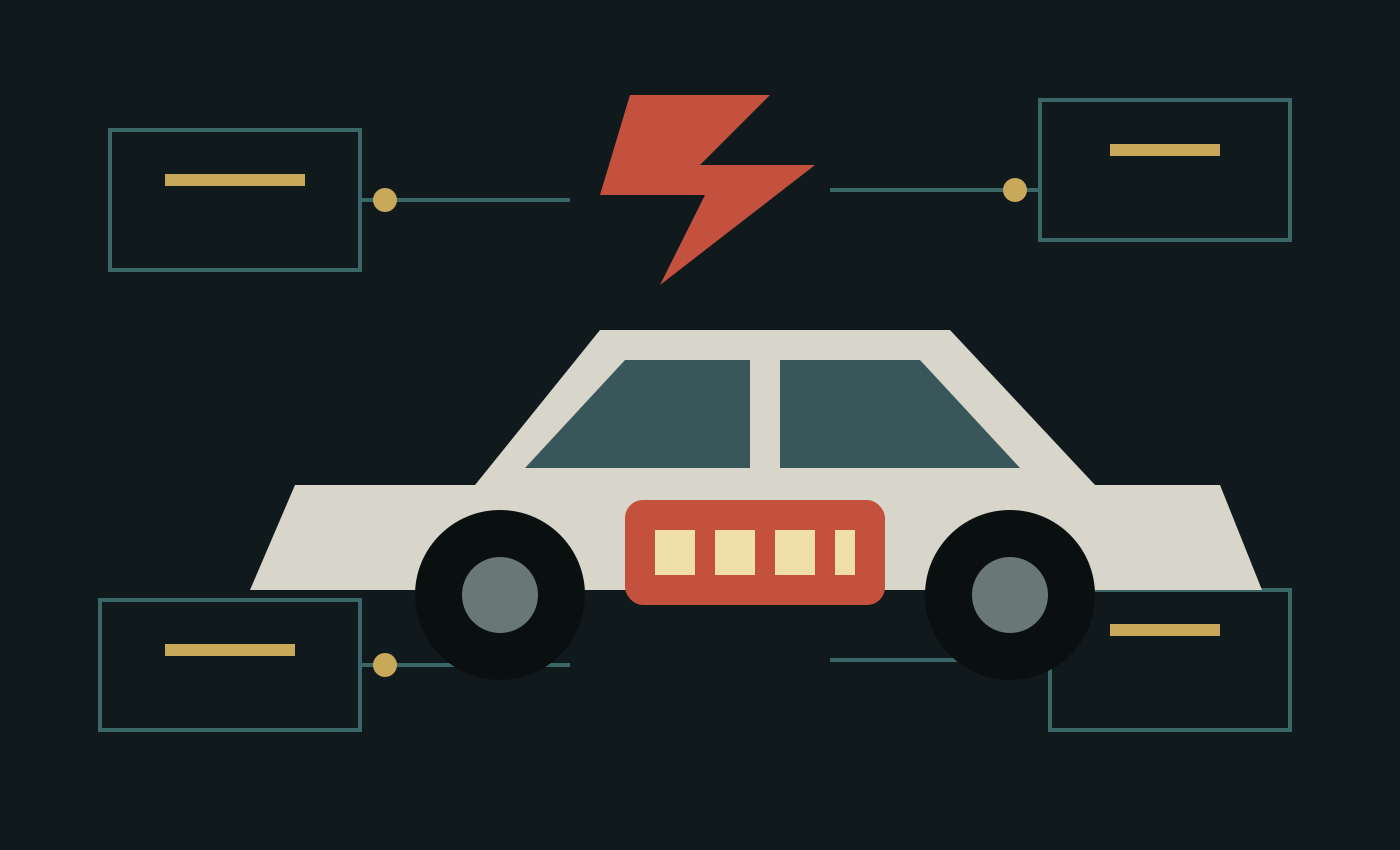
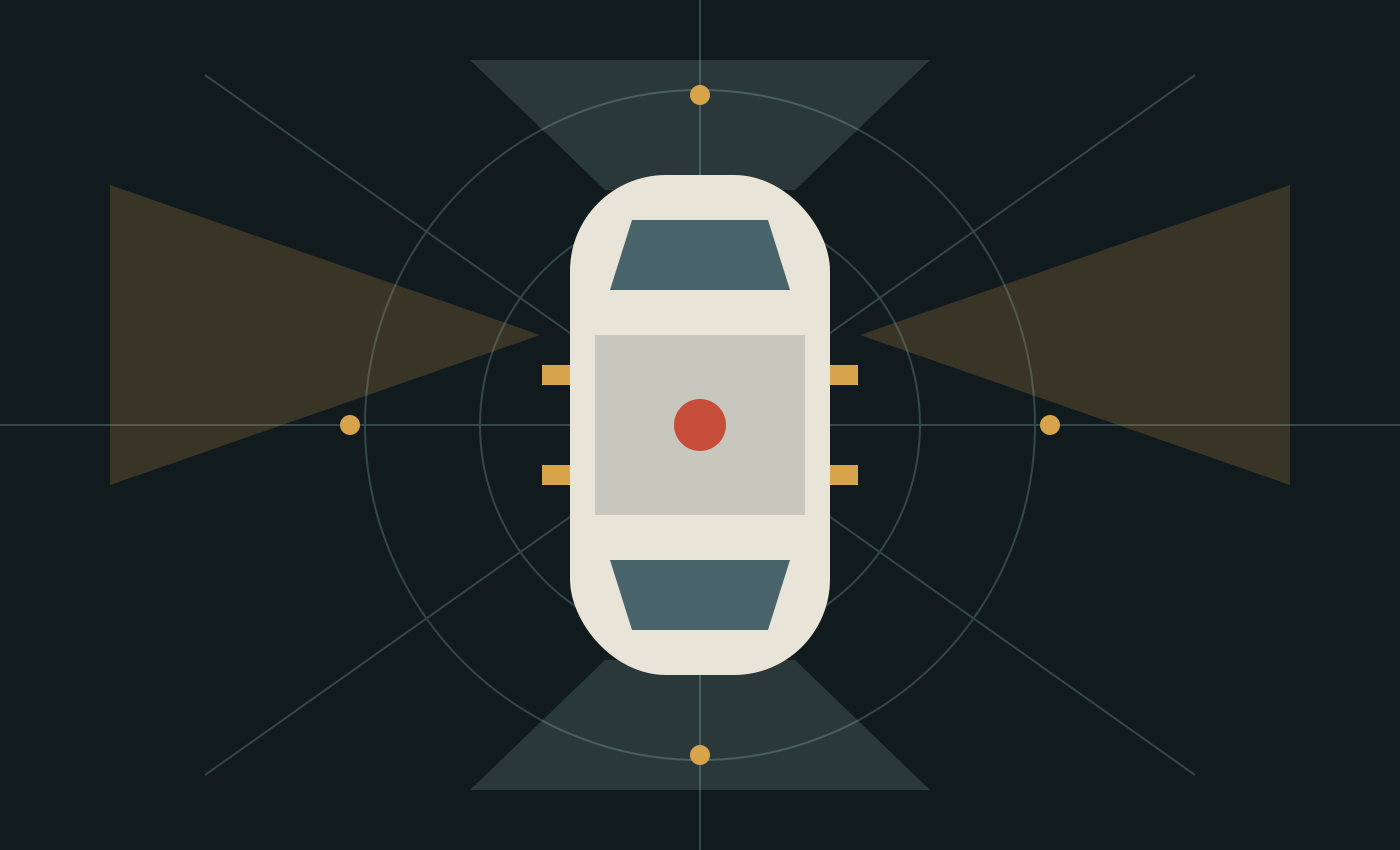
Automatic emergency braking may apply the brakes when a collision appears imminent. Forward-collision warning alerts the driver without necessarily braking. Blind-spot warning monitors adjacent zones, while rear cross-traffic alert watches for approaching traffic during reversing.
Adaptive cruise control adjusts speed to maintain a selected gap. Lane-centering assistance provides continuous steering support, while lane-departure warning and lane-keeping assistance intervene more narrowly. These distinctions matter: a vehicle that nudges away from a lane line is not necessarily designed to remain centered through a curve.
Assistance is not autonomy
SAE’s automation framework separates systems by the roles assigned to the driver and the automated driving system. Most features sold in personal vehicles remain driver-assistance systems. The human driver supervises the road, the system, and the surrounding traffic and must be ready to act.
Hands-free operation on approved roads does not automatically mean eyes-free operation. A driver-monitoring camera may allow hands to leave the wheel while still requiring attention to the road. The operational design domain—the conditions in which a system is intended to work—can be limited by road type, mapped area, speed, weather, or traffic.
Why systems miss things
Cameras can be affected by glare, darkness, precipitation, dirt, and faded markings. Radar and ultrasonic sensors have their own limits. Construction zones, unusual vehicles, sharp crests, debris, stationary objects, and conflicting lane lines can challenge perception and decision software.
Sensor calibration is also important after windshield replacement, collision repair, suspension changes, or wheel alignment. A system without a warning light is not proof that every sensor is aimed correctly.
Use the feature deliberately
Before relying on any assistance feature, read its limitations and learn its status indicators. Know whether it controls speed, steering, or both; whether it recognizes stopped traffic; and how it requests a takeover. Keep sensors clean and respond promptly to warnings.
The best ADAS can reduce workload and help recover from a mistake. It cannot repeal physics, see perfectly, or transfer responsibility through a marketing name. Treat it as a fallible co-pilot, not a replacement driver.
Sources and Further Reading
Links were checked on the access date shown. Missing or broken links should be reported for editorial review.
- National Highway Traffic Safety Administration — “Driver Assistance Technologies”Original publication date not stated · Accessed July 27, 2026
- SAE International — “SAE Levels of Driving Automation Refined for Clarity and International Audience”Published May 3, 2021 · Accessed July 27, 2026
Editorial disclosure
This article was prepared from the cited public sources. Torque & Trend did not receive payment for coverage and does not claim first-hand driving experience unless explicitly stated.