Charging speed depends on the outlet, the station, the car, the battery, and the weather. Here is the system without the jargon.
Key facts
- Level 1 and Level 2 charging use alternating current; the car converts it for the battery.
- DC fast charging sends direct current to the battery at much higher power.
- A station's maximum rating is not a promise that every vehicle will charge at that rate.
EV charging is easier to understand when separated into two jobs: routine charging where the car spends time and rapid charging during travel. Most owners do not need a public fast charger for every refill. The quiet advantage of an EV is adding energy while the vehicle is parked.
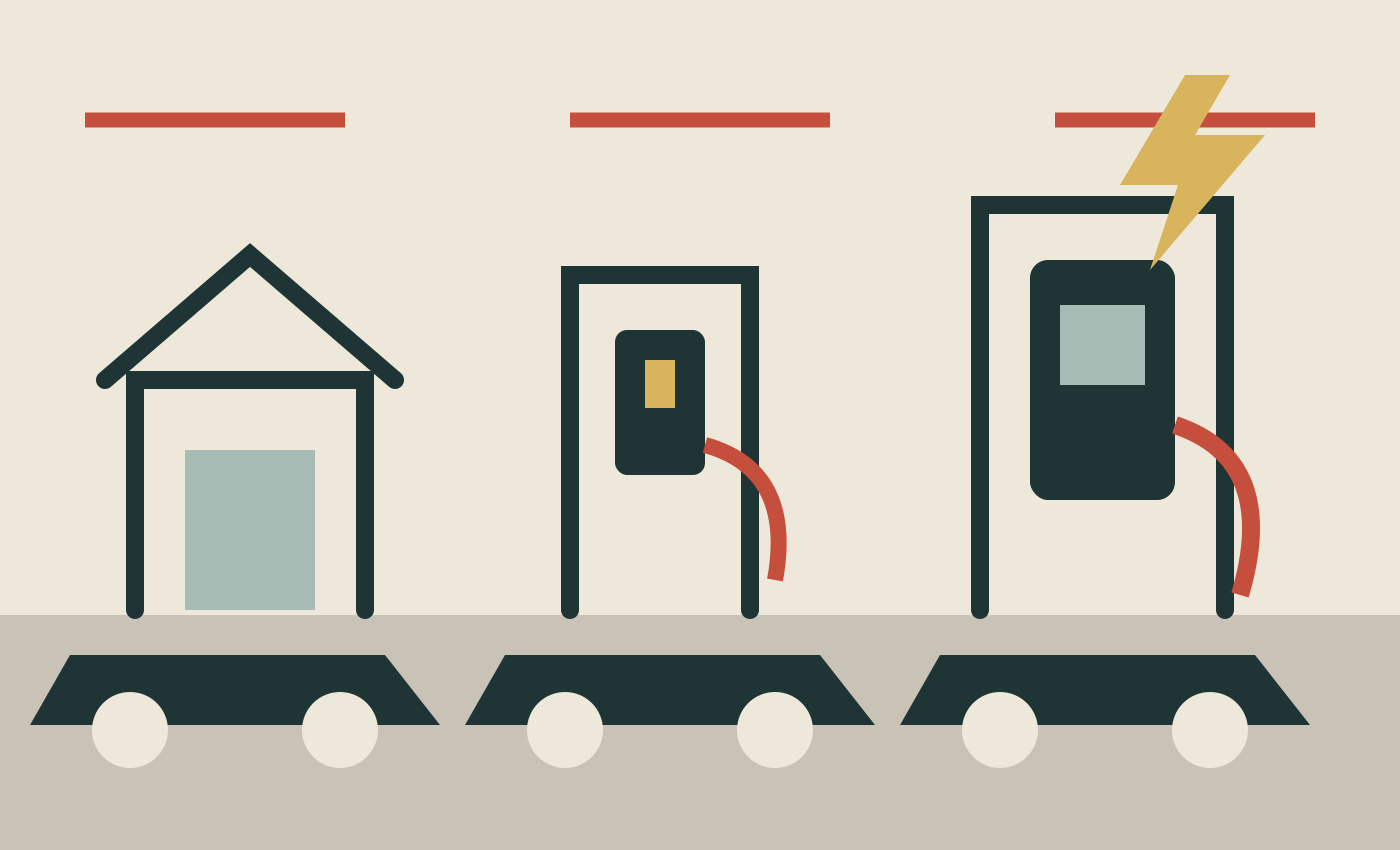
Level 1: slow but simple
Level 1 charging uses a common 120-volt household outlet. It adds range slowly, so it works best for drivers with short daily mileage, plug-in hybrids, or long overnight parking windows. The outlet and circuit should be in good condition and evaluated by a qualified electrician when there is any doubt. Extension cords are not a substitute for a properly installed charging setup.
Level 2: the home-charging sweet spot
Level 2 charging generally uses 240 volts. It is common in homes, workplaces, parking garages, and public destinations. Power varies by circuit and equipment, but it can replenish a typical daily drive in a few hours rather than overnight and beyond.
The equipment mounted on the wall is technically electric vehicle supply equipment, or EVSE. The car’s onboard charger determines how much AC power it can accept. Installing a higher-rated unit does not force the car to take more power than it supports.
DC fast charging: for the road
DC fast chargers bypass the vehicle’s onboard AC charger and deliver direct current to the battery. They are much faster, but the charging rate is not constant. A vehicle may reach a high peak briefly, then taper as the battery fills or warms.
Battery state of charge is critical. Many EVs charge fastest at a low state of charge and slow substantially above roughly 80 percent. That is why road-trip estimates often describe a 10-to-80-percent session. The exact curve varies by model, temperature, battery conditioning, and station performance.
Connectors and networks
The North American market is transitioning toward the SAE J3400 connector, often called the North American Charging Standard, while many vehicles and stations continue to use CCS. Adapters can bridge some combinations, but compatibility, voltage, software authorization, and network access still matter. Confirm the vehicle maker’s current guidance before buying an adapter.
Think in energy, not only time
Battery capacity is measured in kilowatt-hours. Charging power is measured in kilowatts. A simplified estimate divides the energy needed by the average charging power, but real sessions include conversion losses and changing power levels.
For daily ownership, ask whether the car can replace your typical mileage during its normal parking window. For travel, inspect the actual route, station reliability, nearby amenities, and backup locations. The best charging plan has redundancy and does not require arriving with exactly zero range.
Sources and Further Reading
Links were checked on the access date shown. Missing or broken links should be reported for editorial review.
- U.S. Department of Energy, Alternative Fuels Data Center — “Electric Vehicle Charging Infrastructure”Original publication date not stated · Accessed July 27, 2026
Editorial disclosure
This article was prepared from the cited public sources. Torque & Trend did not receive payment for coverage and does not claim first-hand driving experience unless explicitly stated.