The right powertrain depends less on ideology than on where you park, how far you travel, and how much complexity you want to manage.
Key facts
- Battery-electric vehicles run without a gasoline engine and depend on external charging.
- Conventional hybrids refuel with gasoline and recover energy through regenerative braking.
- Plug-in hybrids can cover some trips on electricity but still carry an engine and fuel system.
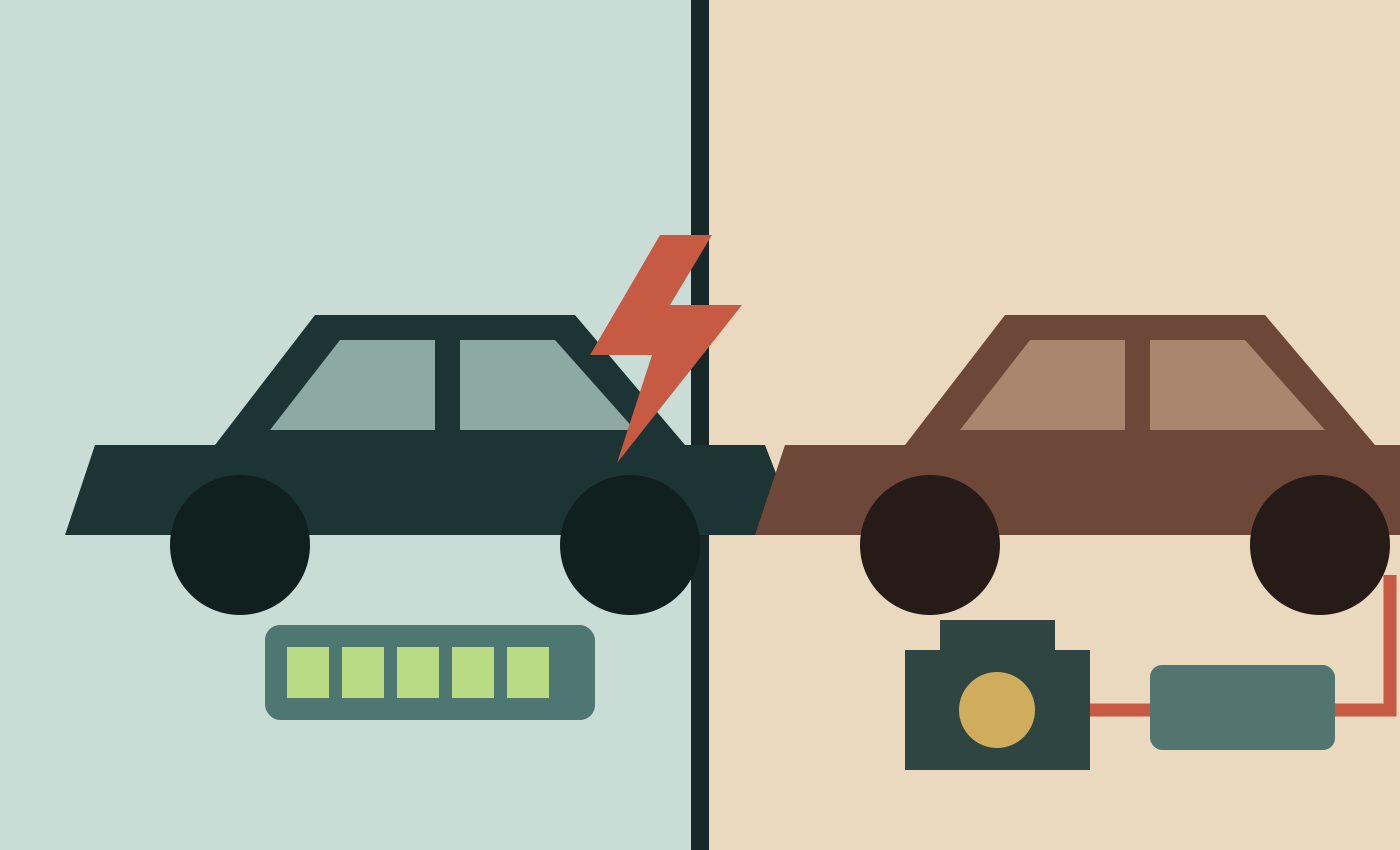
The most useful way to compare an electric vehicle with a hybrid is to start with your routine, not the badge on the trunk. A battery-electric vehicle can be exceptionally convenient when it charges where it sleeps. A hybrid can be easier when parking is unpredictable, road trips are frequent, or public charging is the only option.
Start with where the car parks
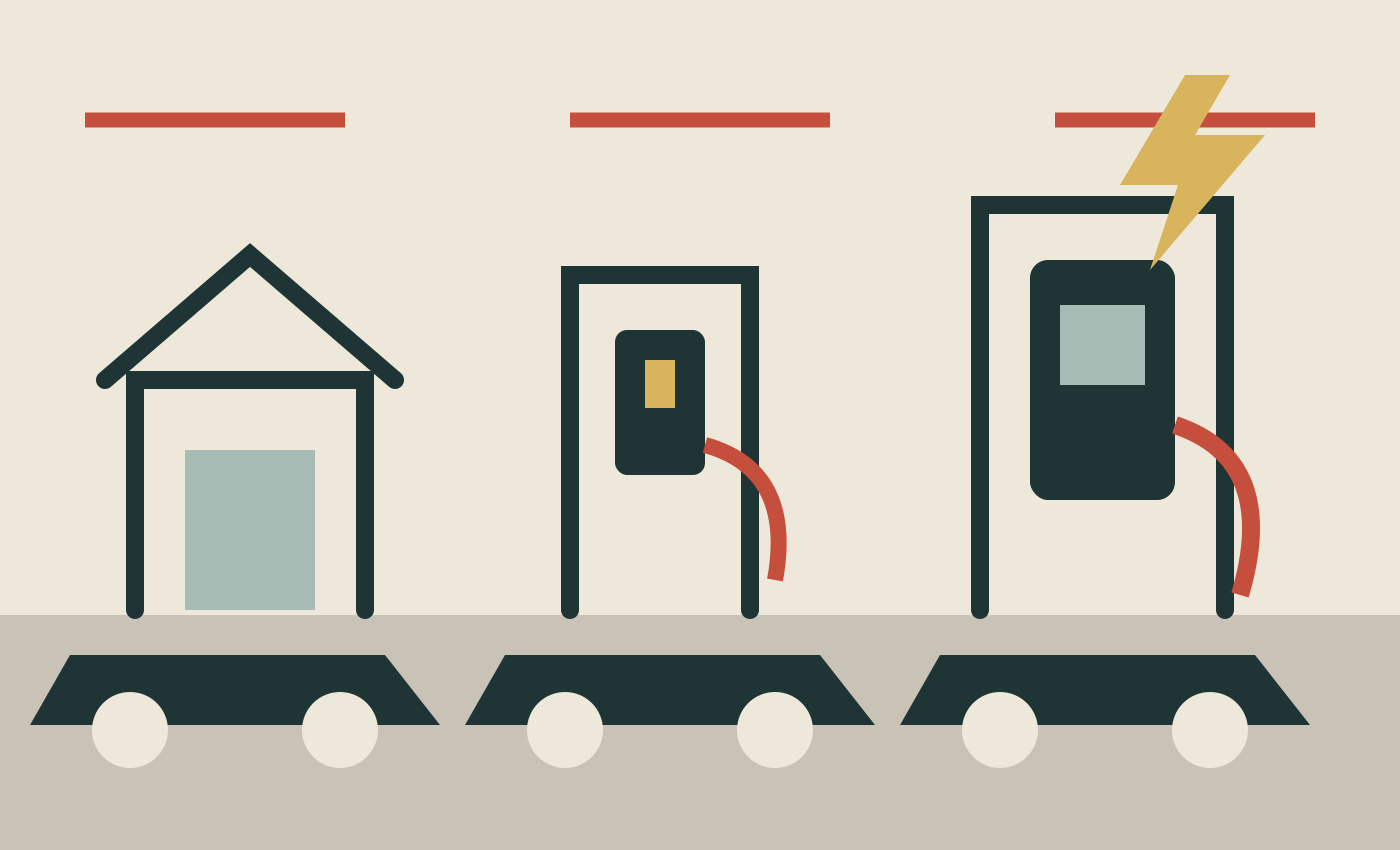
Home charging changes the EV equation. A driver who can plug in overnight may begin most mornings with enough range for the day and make fewer dedicated energy stops than a gasoline-car owner. That advantage shrinks when charging depends on an occupied apartment-garage outlet or a public station several miles away.
A conventional hybrid does not need to be plugged in. Its battery is charged by the engine and regenerative braking—the process of using the electric motor as a generator while the vehicle slows. This improves efficiency, especially in traffic, without asking the owner to change refueling habits.
A plug-in hybrid sits between the two. It has a larger battery than a conventional hybrid and can travel a limited distance on grid electricity. When that charge is depleted, the gasoline engine allows the trip to continue. The tradeoff is mechanical complexity: two propulsion systems, extra weight, and an ownership benefit that depends on regular charging.
Match range to the difficult days
Daily mileage is only the opening question. Consider the least convenient days too: winter airport runs, holiday travel, towing, rural trips, or a week when the preferred charger is unavailable. EV range varies with speed, temperature, terrain, climate-control use, payload, and towing.
That does not mean an EV needs enough rated range to cover your longest annual trip without stopping. Gasoline cars stop too. It means the charging stops should fit the route and the people traveling. Check the actual networks along common corridors rather than relying only on a national station count.
Compare total cost, not just fuel
Electricity can cost less per mile than gasoline, but local utility rates and public fast-charging prices vary. Insurance, depreciation, tire wear, registration fees, financing, and purchase price can outweigh energy savings. Hybrids typically cost more than comparable non-hybrid models but may recover part of the premium through lower fuel consumption.
EVs eliminate oil changes and several engine-related service items. They do not eliminate maintenance. Tires, suspension parts, brake fluid, cabin filters, cooling systems, and eventually friction brakes still need attention. A plug-in hybrid retains most combustion-engine maintenance while adding high-voltage components.
A practical decision rule
Choose an EV when dependable charging is available, the vehicle’s real-world range suits difficult days, and the total ownership calculation works. Choose a conventional hybrid when efficiency matters but charging is impractical. Consider a plug-in hybrid when daily trips fit its electric range, you will actually plug it in, and the gasoline backup solves a genuine need.
No powertrain is universally best. The right one reduces friction in your real life rather than creating a new weekly chore.
Sources and Further Reading
Links were checked on the access date shown. Missing or broken links should be reported for editorial review.
- U.S. Department of Energy, Alternative Fuels Data Center — “Hybrid Electric Vehicles”Original publication date not stated · Accessed July 27, 2026
- U.S. Department of Energy, Alternative Fuels Data Center — “All-Electric Vehicles”Original publication date not stated · Accessed July 27, 2026
Editorial disclosure
This article was prepared from the cited public sources. Torque & Trend did not receive payment for coverage and does not claim first-hand driving experience unless explicitly stated.