Power matters, but weight, gearing, traction, response, and the roads you use often matter more than the peak number.
Key facts
- Horsepower describes the rate at which work is done; torque is a twisting force.
- Vehicle weight and gearing strongly affect acceleration.
- Usable performance includes braking, tires, cooling, and repeatability—not only peak output.
Horsepower is easy to advertise because it compresses a complicated machine into one impressive number. It is much less useful as a complete description of how a car feels. Two vehicles with the same output can accelerate, respond, and sustain performance very differently.
What the number means
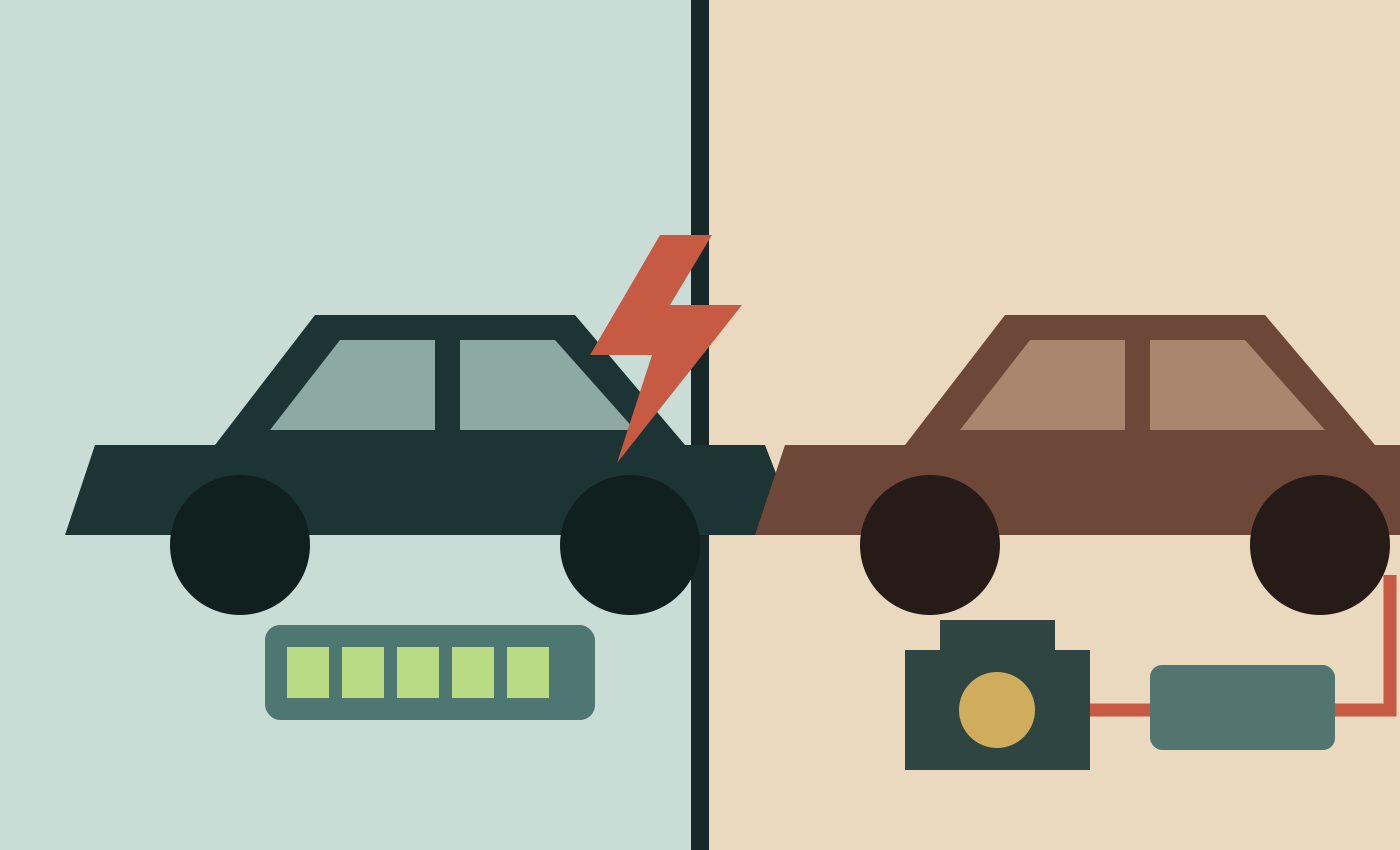
Torque is rotational force. Horsepower describes how quickly work can be done and is calculated from torque and engine speed. Electric motors often produce strong torque from very low speed, which helps explain their immediate response. Combustion engines depend more heavily on gearing and the engine’s operating range.
Peak horsepower also occurs at a particular speed. A car driven in traffic spends little time at its peak. Throttle calibration, transmission behavior, turbocharger response, and electric-motor programming influence the performance you actually use.
Weight changes everything
Power-to-weight ratio is more revealing than output alone. Adding power can improve acceleration, but reducing mass helps acceleration, braking, cornering, tire load, and efficiency at the same time. A lighter 250-horsepower car may feel more alert than a much heavier 350-horsepower vehicle.
Traction matters too. Power that overwhelms the driven tires becomes wheelspin or electronic intervention. All-wheel drive can make strong launches easier, but it adds mass and mechanical loss. Good tires can transform a car without changing its engine output at all.
Useful ranges, with context
There is no universal threshold, but many modern compact cars are entirely comfortable in normal use with roughly 150 to 200 horsepower. Family crossovers often land in the 180-to-300-horsepower range because they are heavier and may carry more passengers. Above that, gains become increasingly about effortless passing, towing, sustained high-speed use, or entertainment.
The word “need” changes for a truck towing near its rated limit, a high-altitude driver, or an enthusiast attending track days. It also changes with gearing. A well-calibrated transmission can keep a modest engine in its productive range, while a hesitant transmission can make a powerful engine feel sleepy.
Performance is a system
If the goal is enjoyable driving, examine steering, brake feel, seating position, visibility, suspension control, and tire choice. If the goal is repeated track use, cooling capacity and brake durability matter more than a single acceleration run. If the goal is daily confidence, smooth response may matter more than a dramatic peak.
Buy enough output to do the hard jobs without strain. Beyond that point, horsepower is preference—not necessity. There is nothing wrong with choosing more for enjoyment, provided the extra purchase price, insurance, fuel or electricity use, tires, and brakes fit the budget.
Sources and Further Reading
Links were checked on the access date shown. Missing or broken links should be reported for editorial review.
- U.S. Department of Energy — “Where the Energy Goes: Gasoline Vehicles”Original publication date not stated · Accessed July 27, 2026
Editorial disclosure
This article was prepared from the cited public sources. Torque & Trend did not receive payment for coverage and does not claim first-hand driving experience unless explicitly stated.